
Cervical screening & colposcopy
Cervical screening, colposcopy and LLETZ.
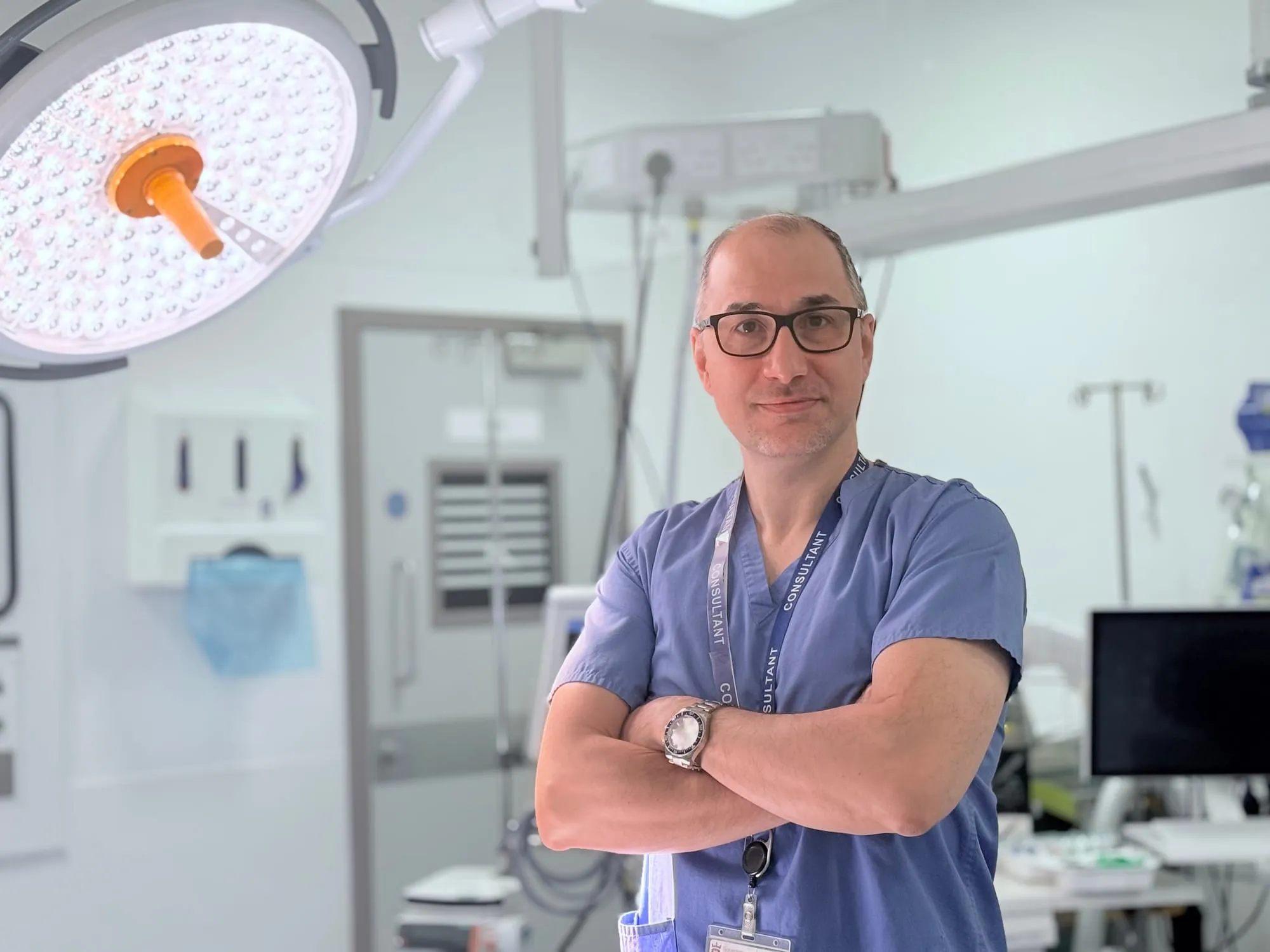
Mr Orabi is a BSCCP-recognised colposcopy supervisor running a focused cervical service. A clear pathway from smear to result, with biopsy and LLETZ treatment available in the same clinic where needed.
Screening
What cervical screening is.
Cervical screening, sometimes called a smear test, is a routine test to check the health of the cervix. It identifies abnormal cells which, in some cases, may develop into cervical cancer if left untreated. It is one of the most effective cancer-prevention tests available.
The test does two things: it looks for high-risk HPV, the virus that can cause cervical cell changes, and where HPV is found, it checks the cervical cells too.
The virus
HPV explained.
HPV stands for human papillomavirus. It is a very common virus that spreads through skin-to-skin intimate contact. Most people get it at some point in their lives, and the immune system clears most infections on its own.
There are many types of HPV. Most are harmless. A small number (called high-risk HPV) can cause cell changes on the cervix, which is why we screen for it.
Reassurance
HPV is very common, and most infections clear on their own. Screening simply makes sure anything that doesn't clear is picked up early.
Your results
Understanding your smear / HPV result.
There are three possible results from a cervical screen:
-
HPV found, no cell changes.
This is the most common result. No treatment is needed; you'll be invited for repeat screening in 12 months to check whether your body has cleared the HPV.
-
HPV found, with cell changes.
You will be referred to colposcopy for a closer look. Most of the time the changes are minor and either resolve on their own or are treated easily.
-
HPV not found.
Cells are not examined separately, because the risk is very low. You return to routine screening at your usual interval.
Closer look
What happens at a colposcopy.
Colposcopy is a closer look at your cervix using a magnifying instrument called a colposcope. The colposcope stays outside your body; nothing extra goes inside you that you would not have for a regular smear.
-
It feels like a slightly longer smear test.
-
A speculum is used.
-
A small amount of acetic-acid solution is applied to highlight any abnormal cells.
-
You can stop at any point.
Sampling
Biopsy.
If your colposcopist sees an area that needs closer examination, a tiny biopsy is taken (usually no bigger than a grain of rice). You may feel a brief pinch. The sample goes to the laboratory for analysis, with results typically available within 2–3 weeks.
Sample size
Grain of rice
Results in
2 – 3 weeks
Treatment
LLETZ treatment.
LLETZ (Large Loop Excision of the Transformation Zone) is the most common UK treatment for abnormal cervical cells. A heated wire loop removes the area of abnormal tissue. The procedure takes 5–10 minutes and is done under local anaesthetic.
Procedure detail
Colposcopy & LLETZ — preparation, recovery and what to expect.
View procedure page →
After treatment
Follow-up and ongoing screening.
After a biopsy with no treatment, most patients return to routine screening. After LLETZ, you'll be invited for a follow-up test at six months, usually called a test of cure. Most patients have a clear result at that visit and return to routine screening intervals.
Test of cure
A repeat smear and HPV test at six months after LLETZ. Most patients have a clear result and return to routine intervals.
Urgent guidance
When to seek advice.
Get in touch with the clinic, or speak to your GP, if you experience:
- Bleeding between periods or after sex
- An unusual or persistent discharge
- Pelvic pain that doesn't settle
- Any concerns after a colposcopy or LLETZ: heavy bleeding, fever, smelly discharge, severe pain