Diagnostic & operative
Laparoscopy (keyhole surgery)
Keyhole investigation of the pelvic and abdominal organs through a small camera, used to diagnose and often treat conditions such as endometriosis, pelvic pain and ovarian cysts. Through one to three small cuts, the abdomen is gently inflated so the camera and instruments can be passed, and biopsies or minor treatments carried out if needed. Most women are back to normal within a few days and avoid heavy activity for one to two weeks. Smaller scars and a quicker recovery than open surgery.
- At hospital
- 30–60 minutes
- General anaesthetic
Overview
About this procedure.
Laparoscopy is one of the most important tools in modern gynaecology. It lets us see directly inside the pelvis and abdomen, confirm a diagnosis, and treat many conditions in the same operation, without a large surgical incision.
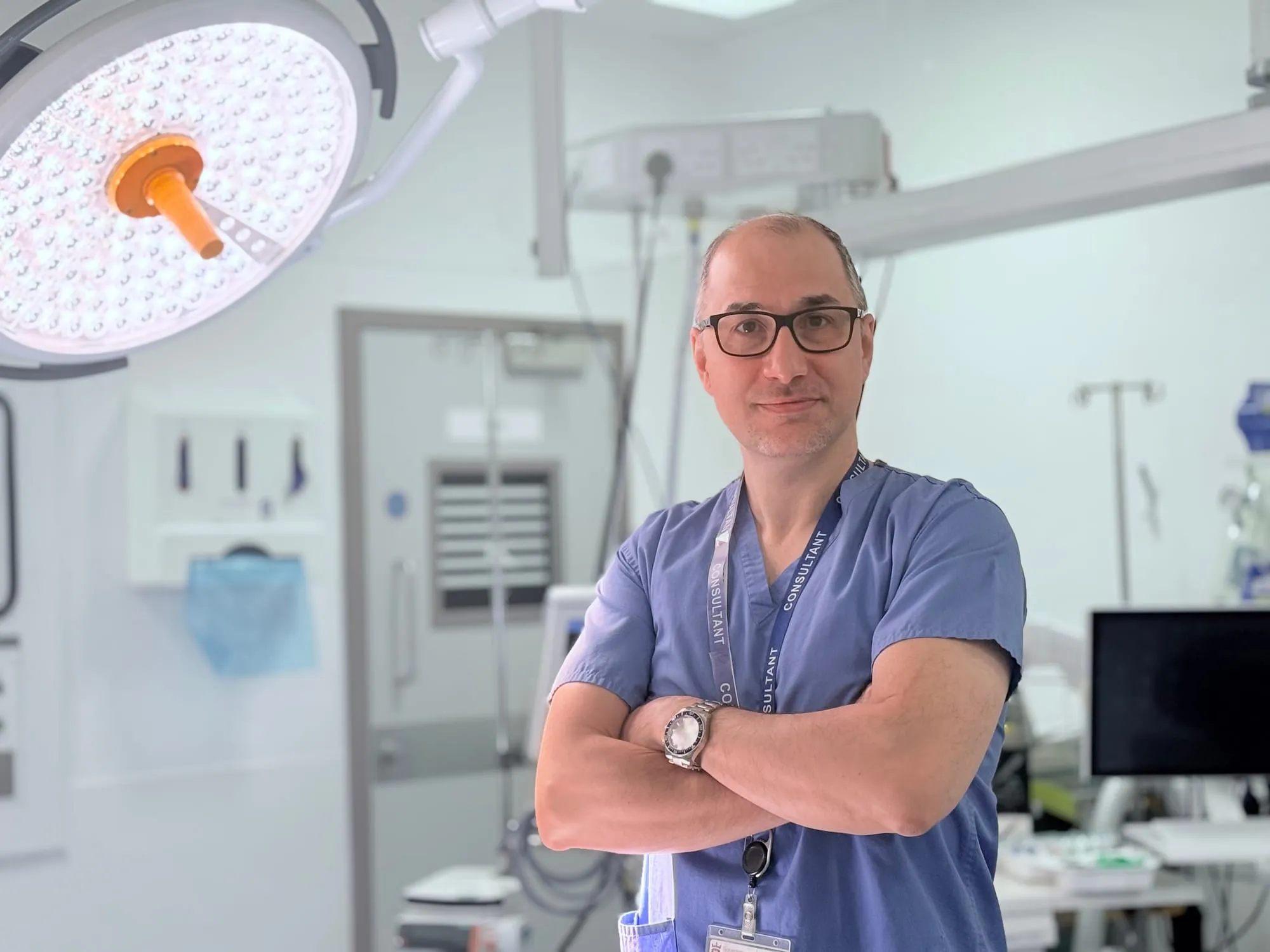
Mr Orabi has more than two decades of laparoscopic experience and is a member of the British Society for Gynaecological Endoscopy (BSGE).
Setting
At hospital
Duration
30–60 minutes
Anaesthetic
General anaesthetic
Indications
What it's for.
-
Investigating pelvic pain
-
Suspected endometriosis or adhesions
-
Ovarian cyst assessment and removal
-
Fertility investigations and tubal patency testing
-
Treatment of selected ectopic pregnancies
On the day
How it's done.
-
Procedure performed under general anaesthetic; you will be asleep throughout
-
Between one and three small (5–10 mm) incisions are made on the abdomen
-
The abdomen is gently inflated with carbon-dioxide gas to give a clear view
-
A thin camera (laparoscope) is passed through the belly-button incision
-
Biopsies, removal of cysts or treatment of endometriosis can be performed in the same operation
-
Incisions are closed with dissolvable stitches or surgical glue
Recovery
After your procedure.
-
Most patients go home the same day
-
Mild bloating, shoulder-tip discomfort and bruising are common for a few days
-
Back to most activities within a few days
-
Avoid heavy lifting and strenuous exercise for one to two weeks
-
Return to work usually within one to two weeks depending on your role
Benefits
Why this approach.
-
Smaller scars and less pain than open surgery
-
Faster recovery
-
Diagnosis and treatment often achieved in one operation
Risks
What to be aware of.
- Bleeding or infection (uncommon)
- Injury to bowel, bladder or blood vessels (rare)
- Reaction to anaesthetic
- Conversion to open surgery in very rare cases
Related conditions
Often seen alongside.