
Cervical treatment
Colposcopy with LLETZ
A close-up examination of the cervix using a magnifying instrument, with the option of treating abnormal cells in the same visit using a heated wire loop (LLETZ). A short procedure that removes the affected area for analysis and treatment. Light bleeding or cramping for a few days is common, and the cervix usually heals over a few weeks.
- At hospital
- 20–40 minutes
- Local anaesthetic
Overview
About this procedure.
Colposcopy is a calm, careful examination of the cervix using a microscope-like instrument called a colposcope. It sits outside your body; nothing extra goes inside you that you wouldn’t have for a regular smear.
If treatment is needed, the most common option is LLETZ (Large Loop Excision of the Transformation Zone). A heated wire loop removes a thin layer of cervical tissue containing the abnormal cells. The procedure takes 5–10 minutes after local anaesthetic.
You’ll be invited for a follow-up screening test four to six months later to confirm the cells have returned to normal.
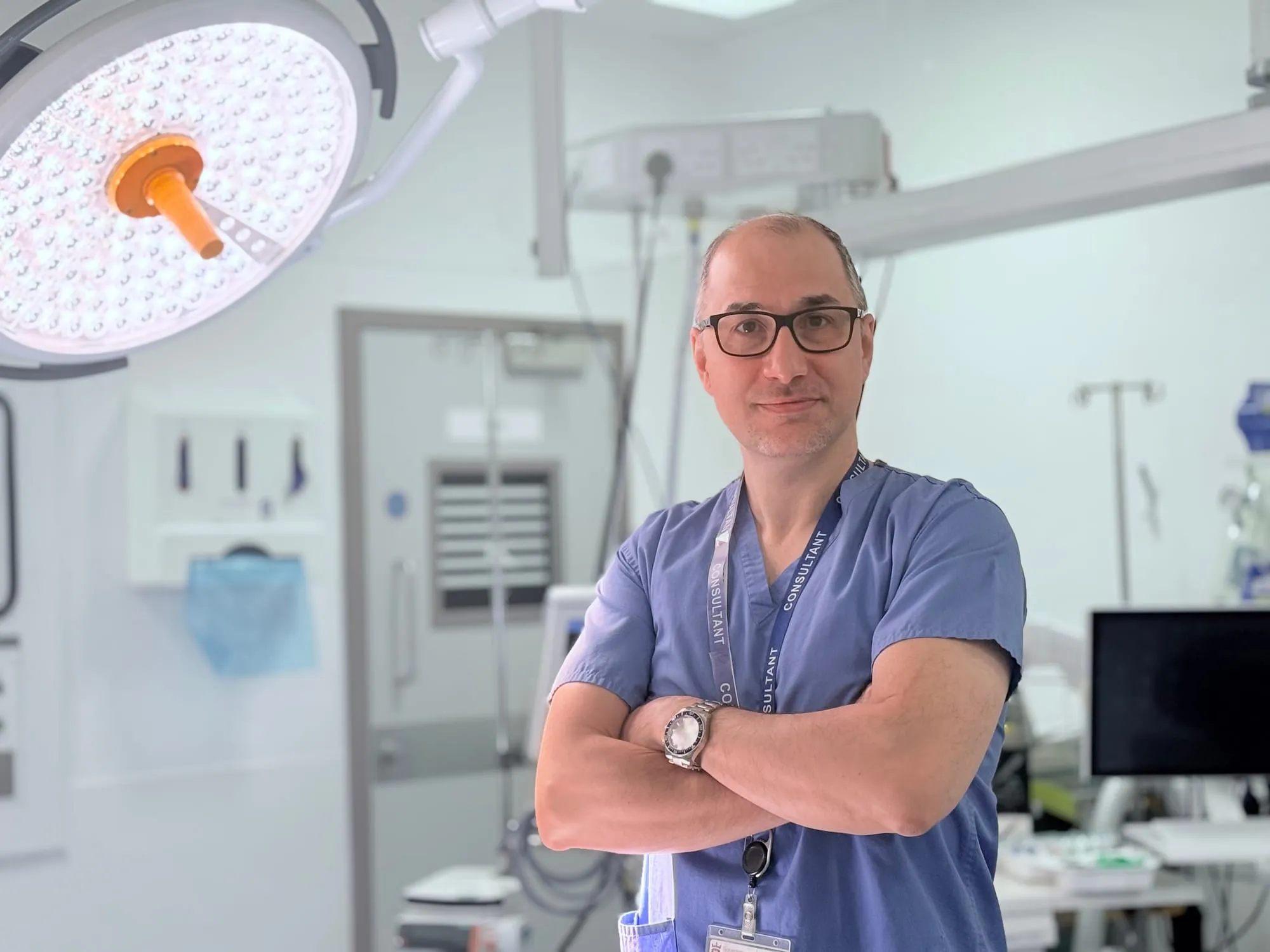
Mr Orabi is a BSCCP-recognised colposcopy supervisor and runs a dedicated cervical service.
Setting
At hospital
Duration
20–40 minutes
Anaesthetic
Local anaesthetic
Indications
What it's for.
-
Follow-up of an abnormal cervical screening result
-
Suspicious appearance of the cervix
-
Persistent high-risk HPV with cell changes
-
Treatment of confirmed pre-cancerous cell changes (CIN)
On the day
How it's done.
-
Procedure done in a colposcopy clinic with a chaperone present
-
A speculum is used, similar to a smear test
-
The colposcope sits outside your body; nothing extra goes inside you
-
Dilute acetic-acid solution is applied to highlight any abnormal cells
-
Where treatment is needed, local anaesthetic is injected into the cervix
-
A heated wire loop removes a thin section of cervical tissue containing the abnormal cells
Recovery
After your procedure.
-
Most patients can drive home and return to normal activities the same day
-
Light bleeding or brownish discharge for a few days is normal
-
Spotting can last three to five days if a biopsy was taken
-
Avoid sex, tampons and vaginal medicines for four weeks after LLETZ
-
Avoid swimming and strenuous exercise for at least two weeks
Benefits
Why this approach.
-
Diagnosis and treatment often achieved in one visit
-
Highly effective at preventing cervical cancer
-
Quick recovery
Risks
What to be aware of.
- Mild cramping during and after the procedure
- Light bleeding lasting a few weeks (normal)
- Infection (uncommon)
- Small increased risk of preterm birth in future pregnancies
Related conditions
Often seen alongside.