Obstetric surgery
Caesarean section
Delivery of a baby through a small incision in the lower abdomen and womb. Planned (elective) or emergency, performed safely and gently by an experienced consultant team.
- At hospital
- 40–50 minutes
- Spinal anaesthetic (most cases), occasionally general
Overview
About this procedure.
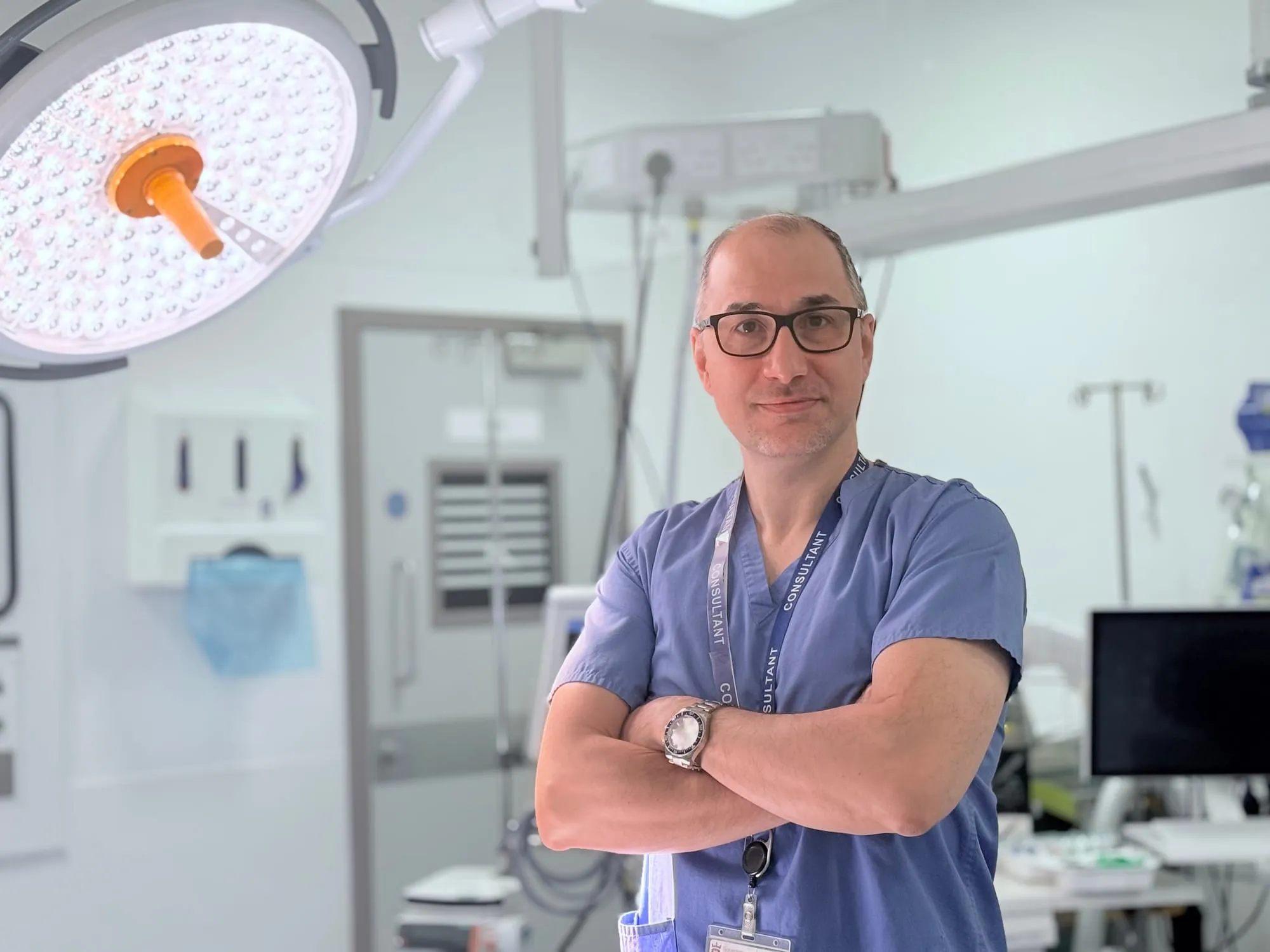
A caesarean section is one of the most commonly performed operations in obstetrics, and one Mr Orabi has performed safely thousands of times across the UK, Middle East and Africa.
A caesarean may be planned (elective, usually from 39 weeks) or emergency (where a vaginal birth becomes unsafe for you or the baby). Some patients also choose a caesarean for non-medical reasons after a detailed discussion of risks and benefits.
Most patients can have a vaginal birth after caesarean (VBAC) in a future pregnancy, but this will be discussed in detail as part of your care planning.
Setting
At hospital
Duration
40–50 minutes
Anaesthetic
Spinal anaesthetic (most cases), occasionally general
Indications
What it's for.
-
Breech presentation or unstable lie
-
Low-lying placenta (placenta praevia)
-
Pre-eclampsia or maternal medical conditions
-
Certain infections (e.g. some viral infections)
-
Baby not receiving enough oxygen or nutrients
-
Labour not progressing safely
-
Excessive bleeding in labour
-
Planned (maternal-request) caesarean after detailed discussion
On the day
How it's done.
-
Spinal or epidural anaesthetic so you are awake but pain-free
-
Catheter placed to keep the bladder empty
-
A horizontal 10–20 cm incision just below the bikini line
-
Layers of tissue and the womb are gently opened
-
Baby is delivered, usually within 5–10 minutes of the start of surgery
-
Placenta is removed and the womb is repaired layer by layer
-
Whole procedure typically takes 40–50 minutes
Recovery
After your procedure.
-
Skin-to-skin and feeding usually possible in theatre or recovery
-
Most patients go home 1–2 days after a planned caesarean
-
Tummy soreness for several days; paracetamol and anti-inflammatories help
-
Avoid heavy lifting (other than the baby) until your 6-week review
-
Scar usually fades to a fine line over 6–12 months
Benefits
Why this approach.
-
Safe delivery where vaginal birth carries higher risk
-
Planned timing for elective caesarean
-
Effective rescue option in emergencies
Risks
What to be aware of.
- Infection of the wound or inside the womb
- Bleeding, occasionally requiring transfusion
- Blood clots (low risk with prophylaxis)
- Bladder injury (rare)
- Baby: small skin nick or short-lived breathing problems (uncommon)